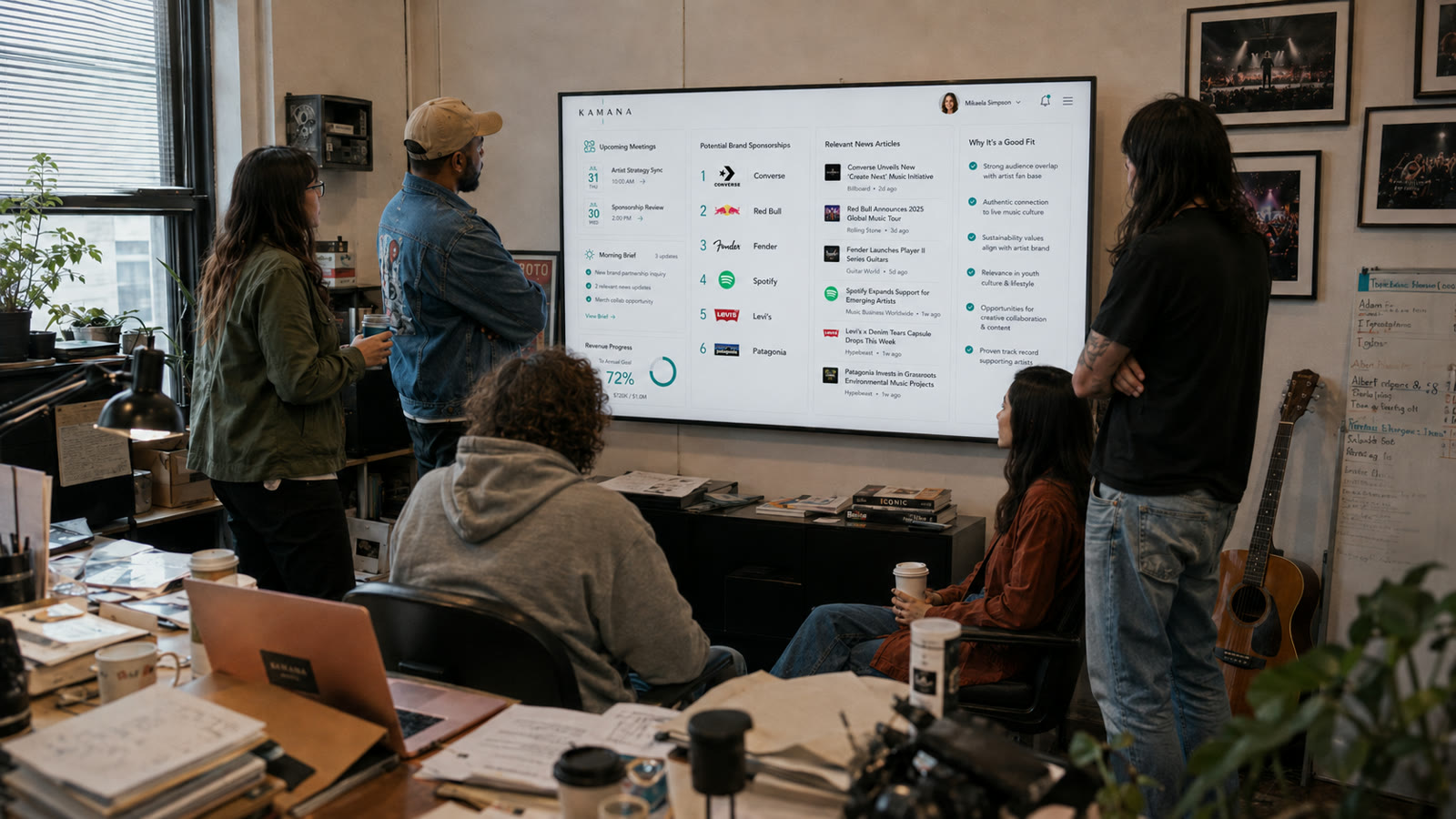
The music business has always been driven by relationships, creativity, and instinct.
What is changing is how quickly managers can access information, make decisions, communicate with artists, and execute opportunities.
Artificial Intelligence isn't replacing music managers. It's becoming the most valuable member of the management team.
The companies that embrace AI today will likely have a significant competitive advantage over those that continue operating with disconnected systems, spreadsheets, emails, Slack messages, and tribal knowledge.

01The Biggest Challenge Isn't AI. It's Information.
Every artist generates enormous amounts of information every day.
Emails, tour schedules, sponsorship discussions, brand briefs, contracts, social media analytics, streaming reports, meeting notes, text messages, marketing plans, content calendars, PR opportunities, and merchandising ideas.
Most management companies already have this information. The problem is, it's everywhere.
Employees spend hours every week searching for answers that already exist somewhere inside the organization.
AI changes that.
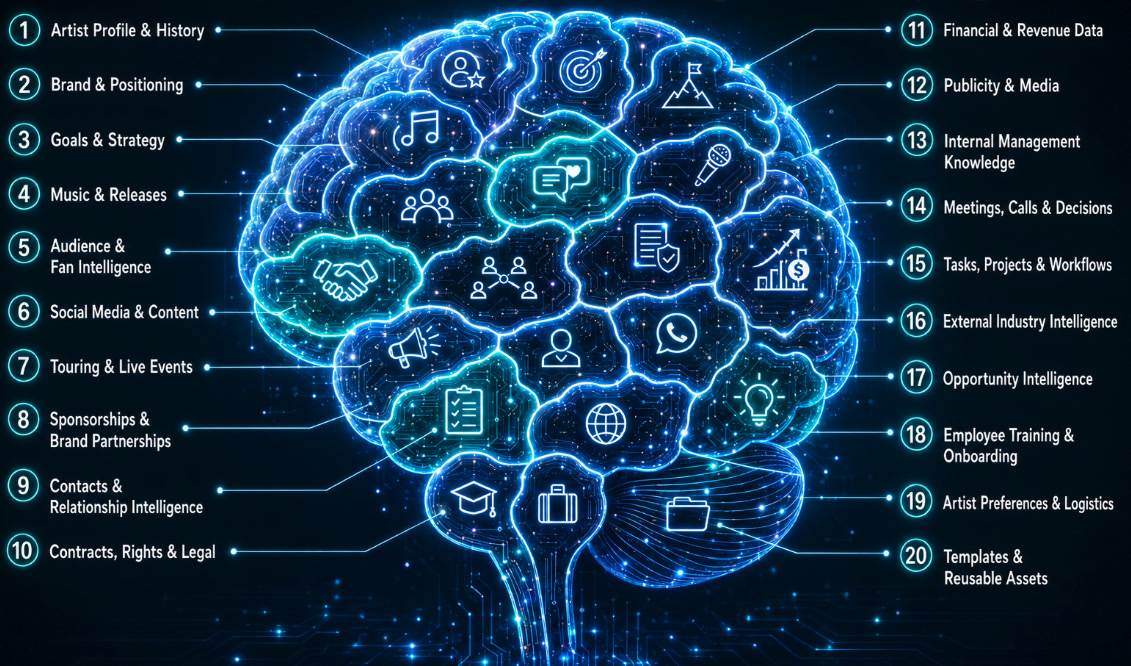
02Imagine If Your Entire Company Had One Brain.
Instead of information living inside dozens of different applications, AI allows companies to build an Intelligence Hub that centralizes organizational knowledge.
Now imagine asking:
- “What sponsorship brands fit this artist?”
- “Summarize every discussion we have ever had with Live Nation.”
- “Create a checklist for launching the next tour based on our previous ten tours.”
Instead of searching through folders, the answer appears in seconds.
This is one of the biggest shifts happening inside management companies today.

03AI Is Becoming Every Manager's Strategic Assistant.
Managers today spend enormous time writing emails, summarizing meetings, organizing notes, preparing artist briefs, creating presentations, updating CRM systems, and preparing sponsorship decks.
These repetitive tasks consume hours every week.
AI can now complete many of these activities in minutes, allowing managers to spend more time on what actually creates value: artist development, negotiations, relationship building, and creative strategy.
Rather than replacing managers, AI removes administrative work so they can focus on higher-value decisions.
04Sponsorship Intelligence Becomes Easier to Find.
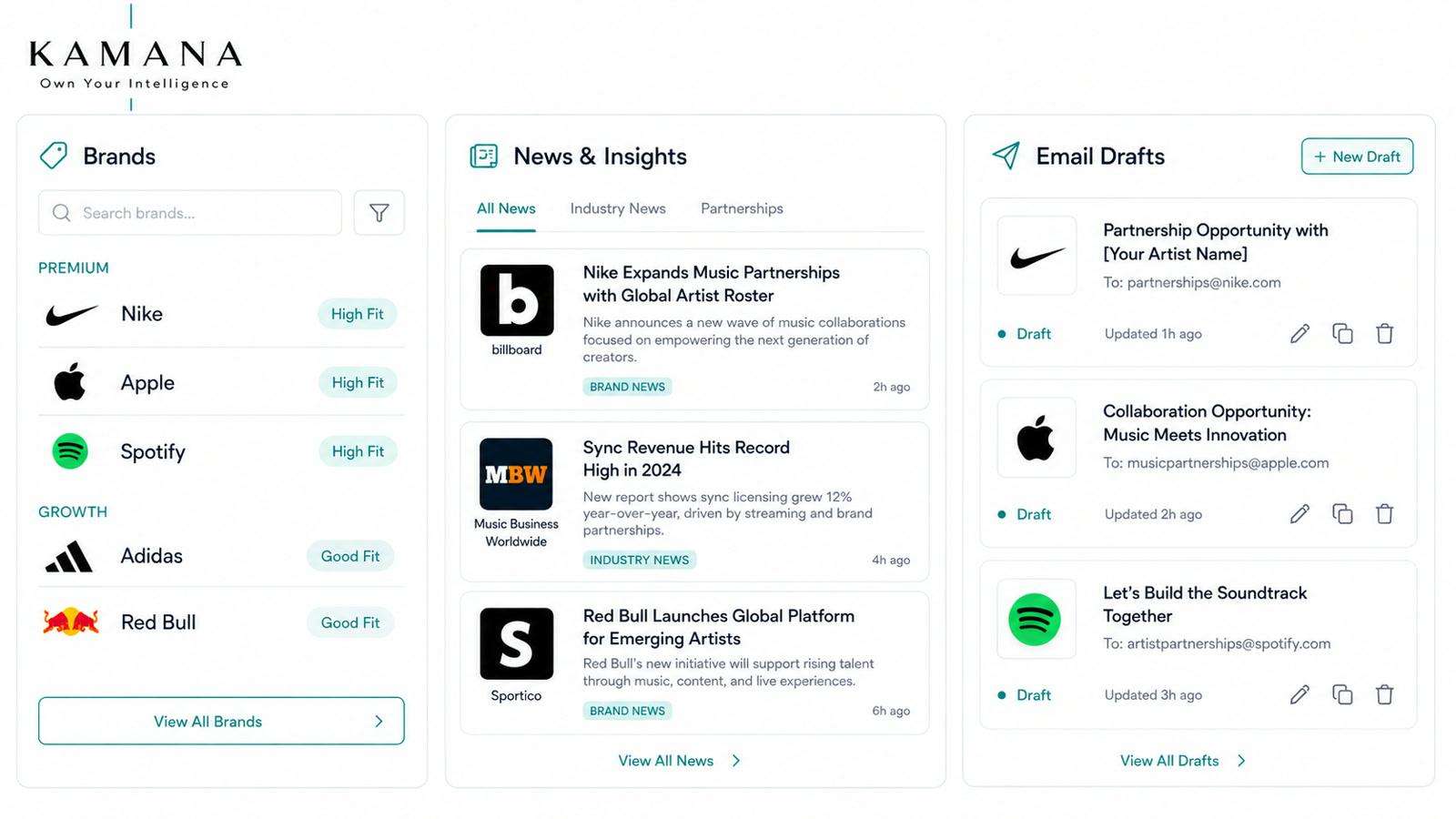
One of the most exciting applications of AI is sponsorship intelligence.
Imagine a manager has identified 150 brands an artist would love to work with. An AI system can continuously monitor those companies for product launches, campaigns, leadership changes, cultural moments, partnerships, and other signals that create a natural reason to start a conversation.
The strongest opportunities can be ranked and placed inside the manager's dashboard. The system can then explain the connection between the artist and the brand, identify relevant decision makers, and draft a personalized outreach email for the manager to review.
What used to require hours of research becomes a repeatable process:
- Identify the most relevant brand opportunity.
- Explain why the artist and brand fit together.
- Locate the appropriate contact and relationship history.
- Prepare the outreach and recommended next steps.

05Every Employee Gets a Senior Manager Beside Them.
The knowledge inside a management company is often concentrated among a small number of experienced leaders. Junior and mid-level employees repeatedly ask the same questions because the answers live inside the heads of senior managers, scattered documents, or old conversations.
An Intelligence Hub changes that. It captures approved guidance, best practices, artist preferences, previous decisions, common mistakes, checklists, and examples of strong work.
Employees can ask questions by text or voice and receive answers based on the company's own knowledge. They become productive faster, prepare more thoroughly, and know when they can act independently or need senior approval.
The AI does not replace experienced managers. It scales their judgment and makes their guidance available when the team needs it.
06The AI Chief of Staff.
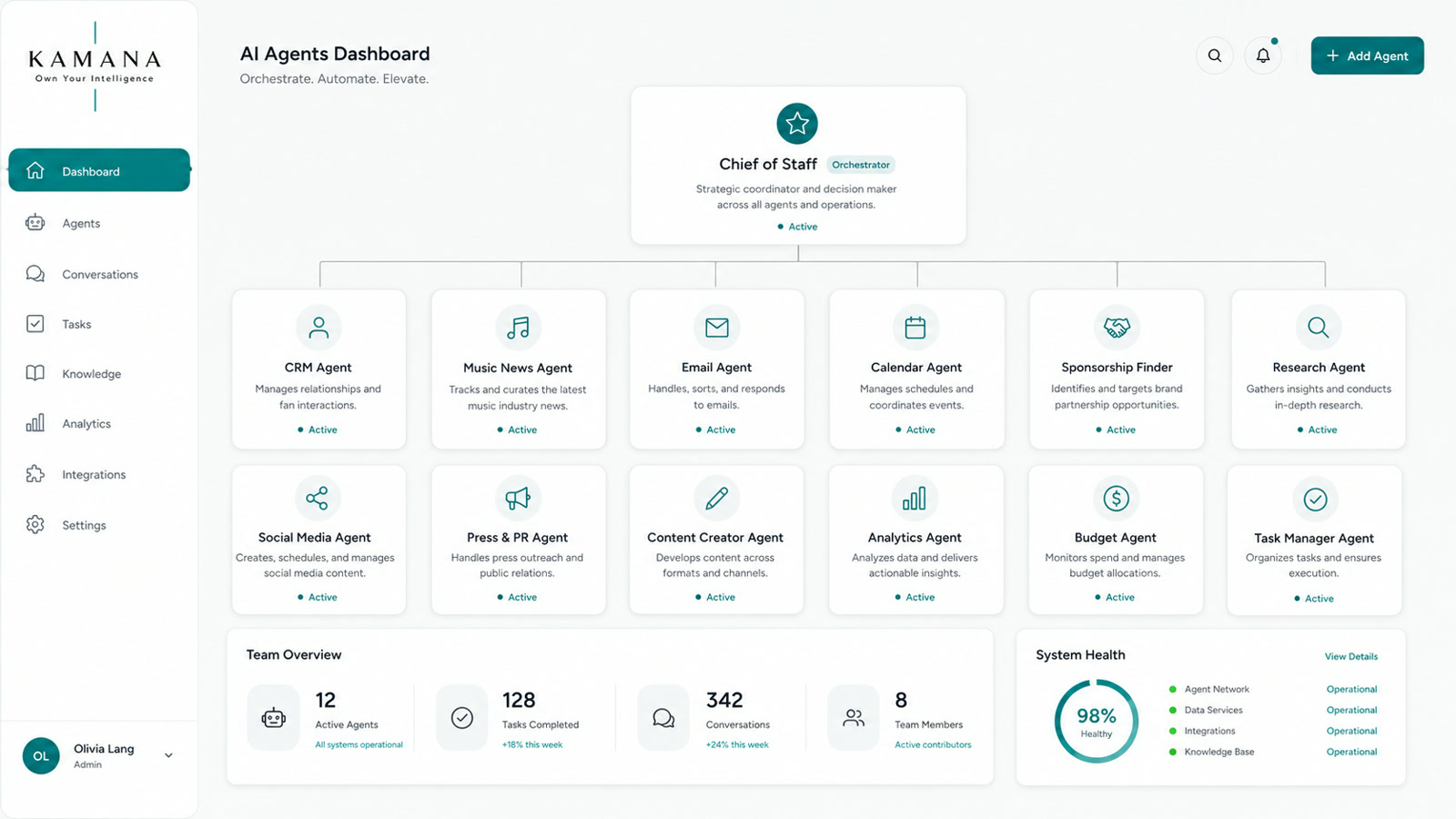
As these capabilities come together, AI begins to operate like a Chief of Staff for every manager.
At the start of the day, it can summarize priorities, flag urgent artist issues, identify unanswered messages, surface upcoming meetings, and recommend the highest-value actions.
Before a meeting, it can prepare a briefing with relationship history, current opportunities, risks, open decisions, and suggested talking points. After the meeting, it can summarize the discussion, identify commitments, draft the follow-up, and create a prioritized to-do list.
Instead of managers continually organizing the work around them, the system organizes the information and prepares the work for the manager's judgment.

07The Future Belongs to Companies That Own Their Intelligence.
Over the next five years, the greatest advantage will not come from simply using more AI tools. It will come from building intelligence systems around the way each management company actually operates.
Every artist strategy, sponsorship conversation, tour plan, contract insight, marketing result, and management decision makes that system more useful. The company's intelligence compounds over time.
This is different from adding another disconnected software subscription. The goal is to create a private, company-specific system that the organization can own, evolve, and train its people to use.
The companies that begin now will move faster, preserve more institutional knowledge, develop stronger employees, identify more opportunities, and make better-informed decisions.
AI will not eliminate the relationships, creativity, judgment, and instinct that define great music management. It will give those human strengths a far more powerful operating system.
08Ready To Build Your Own AI Intelligent Hub
Start small. Kamana’s complimentary AI Diagnosis identifies bottlenecks, repetitive work, and the highest-value opportunity to automate. Together, we select one area and build a focused pilot that removes manual work and frees employees to pursue artist development and revenue-generating projects.
For music management, the pilot might create a Sponsorship Readiness Assistant for one artist. It organizes approved information, guidance, FAQs, and checklists while providing answers and to-do lists by text or voice. Kamana then measures the time saved and creates a roadmap for expanding the Intelligence Hub.
Find your highest-value AI opportunity.
Kamana’s complimentary AI Diagnostic identifies bottlenecks, repetitive work, and the strongest place to start with a focused pilot.
Book Your Free AI Diagnostic
About the Author & Kamana
John Bohan, CEO of Socialtyze, launched Kamana after recognizing how AI could transform artist management firms and talent agencies. At Socialtyze, he oversaw sponsorship programs for more than 50 artists, including Jason Mraz, Ziggy Marley, Jewel, George Thorogood, Train, and Colbie Caillat. Kamana helps artist management firms and talent agencies streamline operations, centralize intelligence, and create more time for their artists and revenue-generating opportunities.